At this year’s Human Needs Project Gala in San Francisco, ACT showcased two woven tapestries made entirely from discarded textiles collected in Nairobi. The evening brought together supporters and partners and raised over $250,000 toward a new Satellite Center in Kibera, expanding access to clean water, energy, education, and economic opportunity.
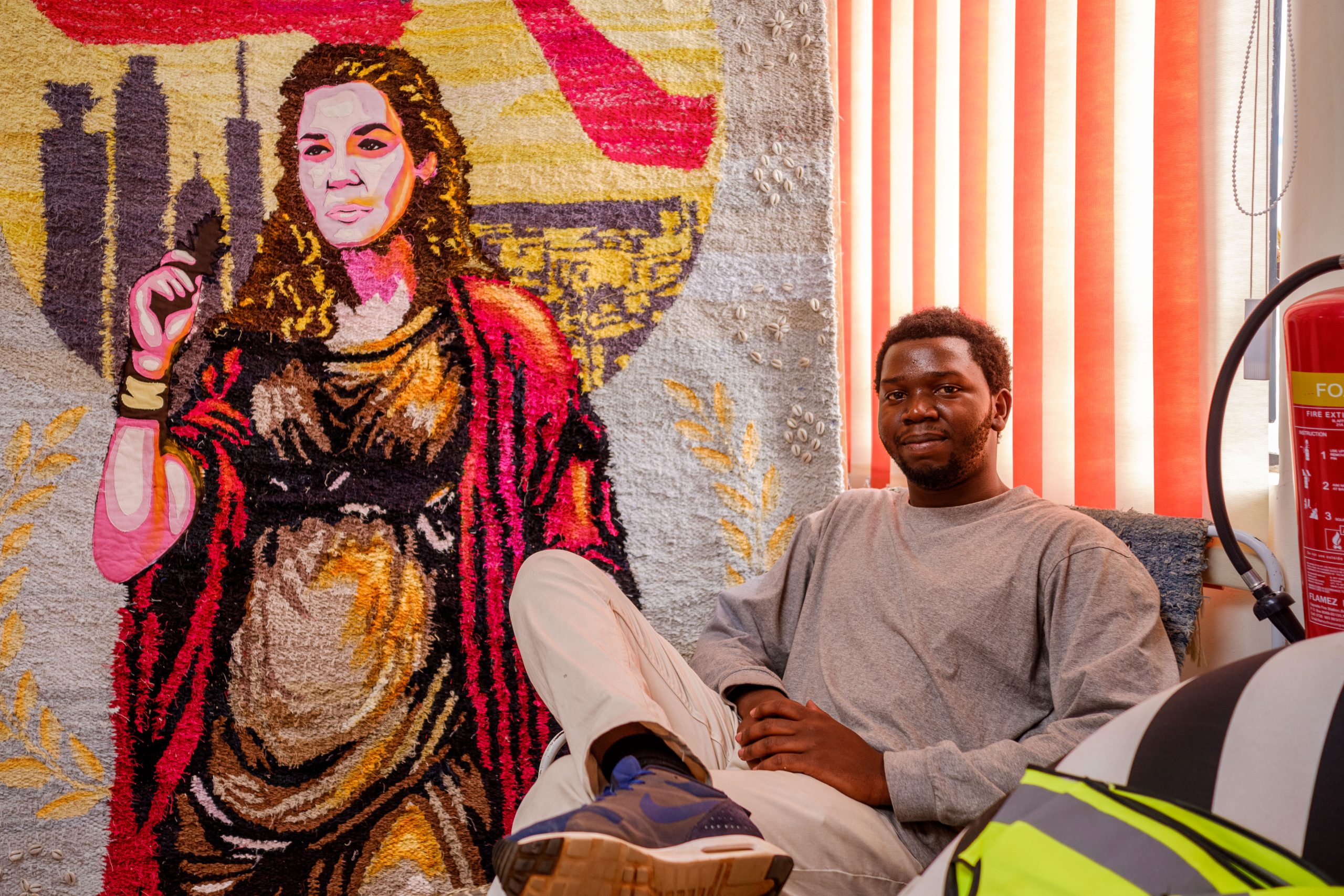
Both tapestries were designed by artist Emmanuel Eperu Magala and woven from textiles that once had no value. Through fabric, they tell stories of strength, heritage, and resilience. Together, these works reflect a shared belief: discarded textiles can carry memory, identity, and power. When kept in circulation, they become tools for storytelling and connection.
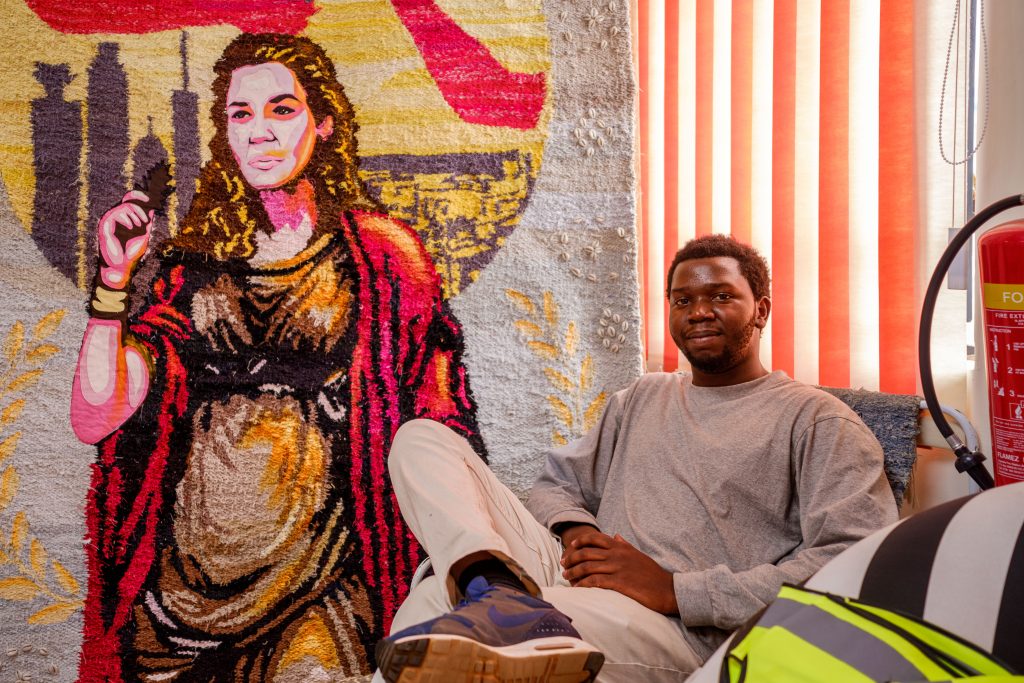
Passing the Torch pays tribute to actress, humanitarian, and Human Needs Project founder Connie Nielsen. Inspired by her role as Lucilla in Gladiator, the piece reimagines her as a Roman sculpture, a symbol of dignity, leadership, and compassion.
The work recognizes Kibera’s residents as modern gladiators: resourceful, creative, and strong.
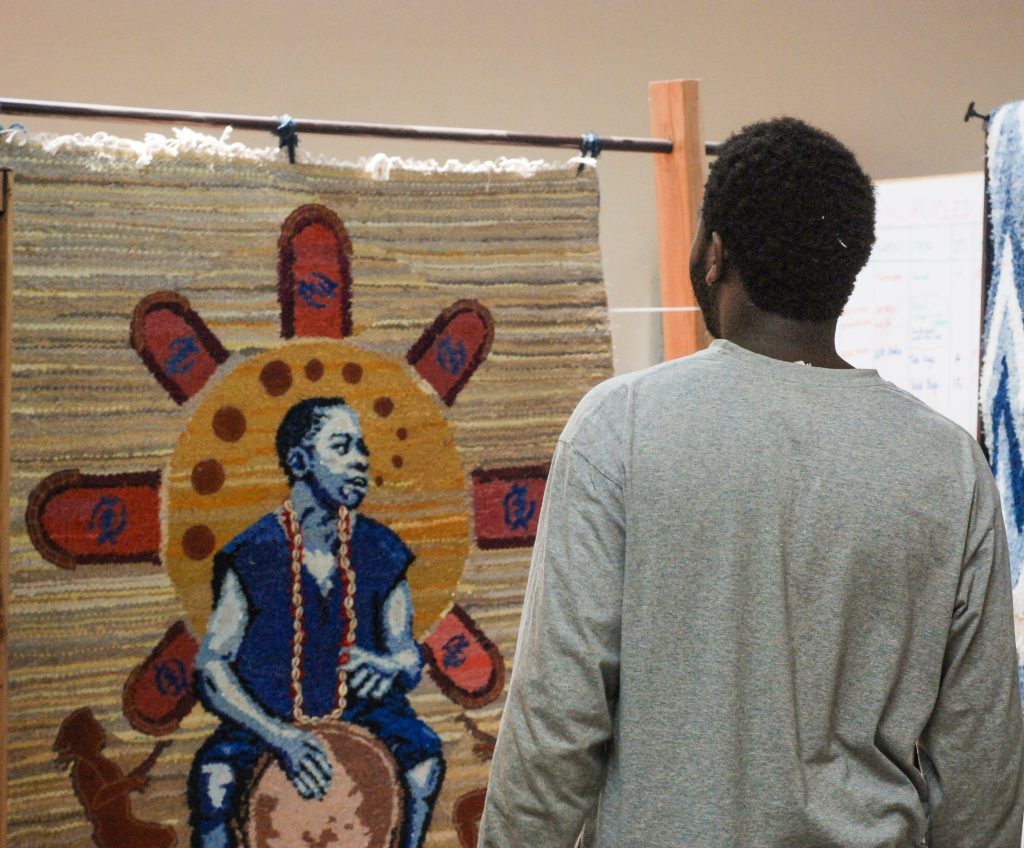
The Drummer places a young musician at its center, the heartbeat of Kibera’s culture and memory. The surrounding arches reference the Roman Colosseum and stand for endurance and unity. Within them sits the West African Adinkra symbol meaning “God is King,” grounding the piece in shared spiritual values. Two dancers complete the scene, moving through rhythm and fabric, showing how culture continues to thrive even in difficult conditions.