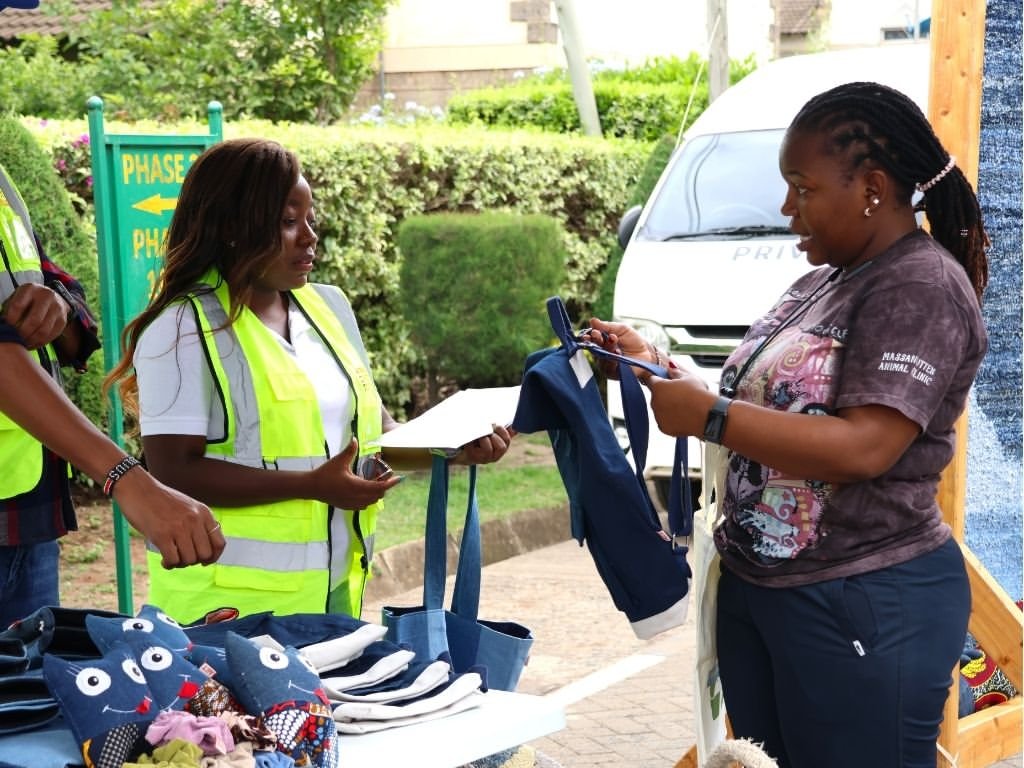
What began as a community collection drive at Baraka Estate, Tassia, became part of a wider national conversation about the future of Kenya’s circular economy.
During the drive, organised in partnership with EPROK, ACT’s work was featured in The Standard. The article highlighted how we collect and sort unwanted textiles, redirect wearable items to communities, and repurpose non-wearable materials into new products.
Why this Matters
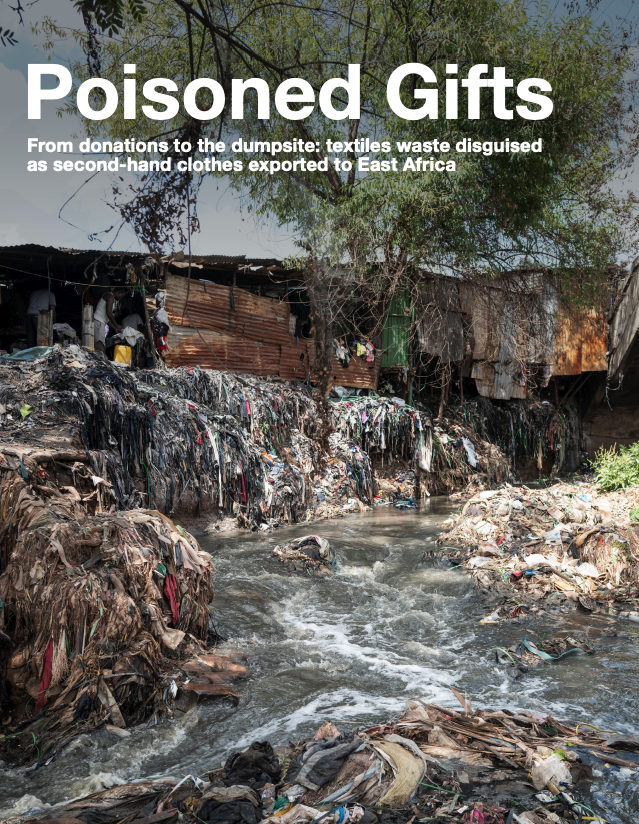
Community collection drives do more than gather unwanted textiles. They provide residents with a convenient and responsible way to dispose of clothes and other textile items they no longer need. They also help raise awareness about the environmental impact of textile waste, encourage better disposal habits and show what can be achieved when communities, businesses and waste-recovery organisations work together.
By collecting and sorting these materials, wearable textiles can be redirected for continued use, while non-wearable items can be repaired, upcycled or processed for material recovery. This helps extend the useful life of textiles, reduce the amount of waste sent to landfills and preserve the value of materials that might otherwise be lost.
The feature also draws attention to the resources required to build a sustainable circular textile economy in Kenya. Effective textile recovery requires continued public participation, strong partnerships, investment in collection and sorting systems, appropriate recycling technology and reliable markets for recovered materials. These elements are essential for turning textile waste into commercially viable products and creating a circular system that can operate and grow over the long term.