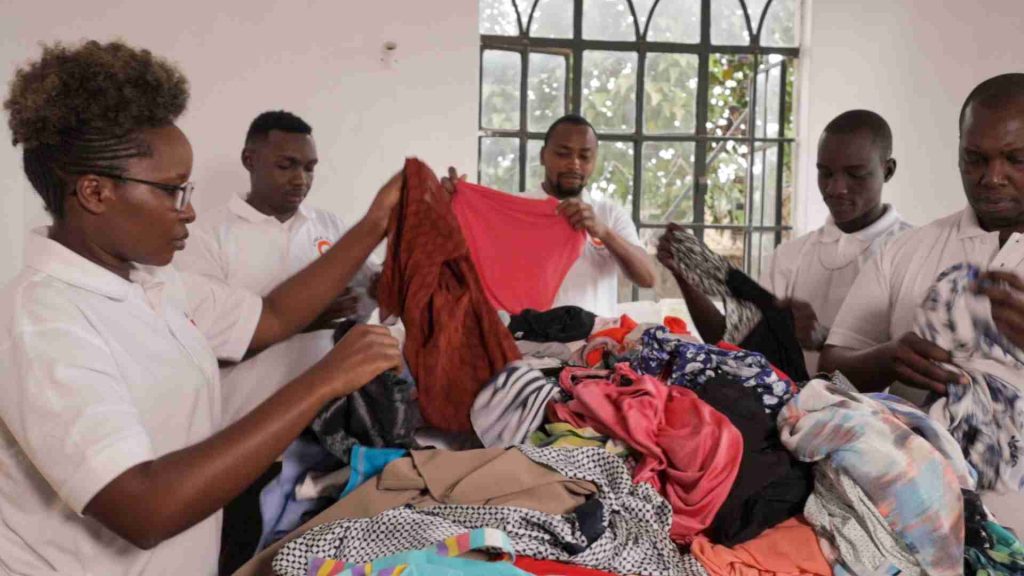
Not all donated items are suitable for orphanages. Think adult-sized clothing, heels, big shoes and other things not needed by children. These items are redistributed to vulnerable women who struggle to access affordable secondhand clothing (locally known as mitumba).
Because we collect textiles locally and isn’t tied to the imported baling system, we can redesign how redistribution works.
Our impact numbers
80+
Resellers (98% women)
110k
kg of redistributed textiles
+10M
KES generated income
How it works
Smaller batches: We provide 10–20 kg “mini-bales” instead of 50–100 kg, reducing upfront costs and making them easier to carry.
Fair pricing: Items are offered more affordably compared to imported mitumba.
Tailored selection: Each batch is curated for resellers. No waste, just wearable pieces.
Local relevance: Garments better match local needs because they’re collected within Kenya.
Direct delivery: We distribute directly to the outskirts of Nairobi and nearby villages, eliminating transport and storage fees for resellers.
Circular benefit: This model reduces dependency on imported secondhand clothes and keeps garments in use for longer.
This system empowers women to earn a living, strengthens local economies, and proves that redistribution can be circular, transparent, and fair.
More Projects
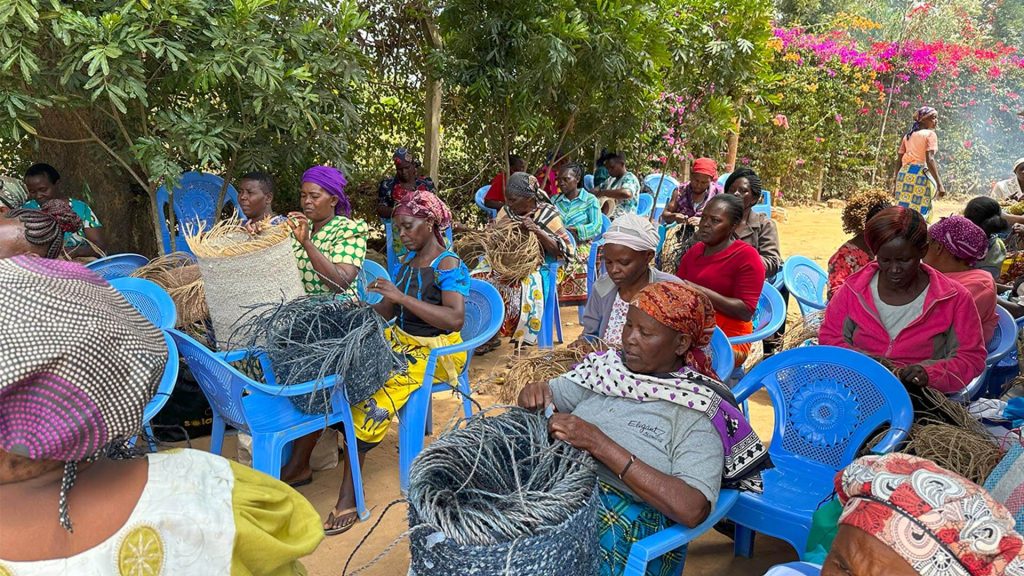
Upcycled woven baskets
We provide the Isolo Weavers Women’s Group with unwearable textiles for their handmade baskets.
Hello! Thank you for your interest in our sustainable textile products!
Do you have a question about a product or would you like to place an order? Let us know. We are happy to discuss the details for delivery or pickup together.